
TOP 100: How Odyssey Systems views acquisition and its links to field operations
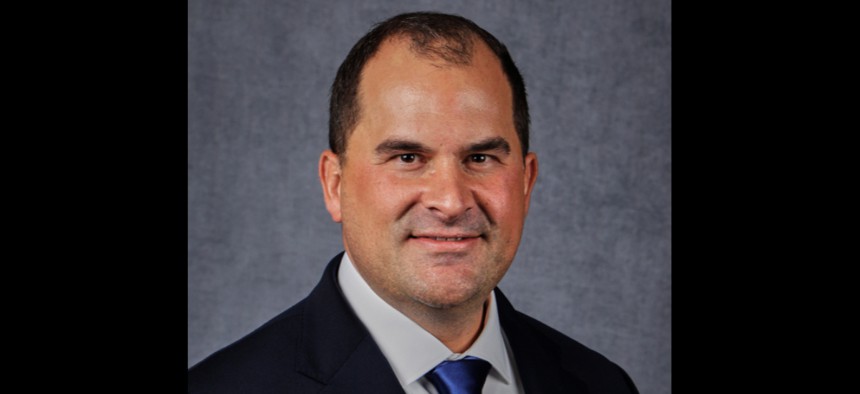
Odyssey Systems' CEO Matt Kasberg first joined the company in 2008 and became its leader in 2025. Odyssey Systems photo.

 By
Ross Wilkers
By
Ross Wilkers
Company No. 73's blueprint for growing into new areas contains a mix of small leaps and longer-term bets that look ahead by five-to-10 years.
Matt Kasberg’s career arc at Odyssey Systems, which he first joined in 2008 as a program manager and became chief executive of in 2025, serves as a microcosm of how defense acquisition has evolved.
Whereas acquisition in 2008 was seen as more of back-office function for agencies, the conversation in 2026 is more about how this line of work directly connects with operators in the field.
The Defense Department’s push to overhaul its acquisition approaches, methods and processes centers around emphasizing metrics and speed to make production and deliveries happen quicker.
In Kasberg’s own words, “acquisition is a warfighting function” that requires getting to the heart of what operators are asking for. Odyssey’s setup as an acquisition support and systems engineering provider puts it in a position to know.
“You need to understand the demand signals from the operators,” Kasberg said. “Part of the acquisition process is understanding what that is, and then it's really translating that need into the most efficient and effective way to get the capability out to them as quickly as possible.”
Odyssey Systems hits Position No. 73 in the 2026 Washington Technology Top 100 rankings, up three spots from the 2025 edition, on $414.8 million in unclassified prime contract obligations. This is Odyssey’s third consecutive year in the rankings after entering them in 2024 at Position No. 99.
A bulk of Odyssey’s business is with the Air Force and breaks out to four primary areas, including airborne technology integration and command-and-control. Warfighter readiness and ISR (intelligence, surveillance and reconnaissance) are Odyssey’s two other key business lines.
Odyssey was born as a company predominantly focused on acquisition-related requirements out of Hanscom Air Force Base in Massachusetts, a major hub for weapon systems acquisition and electronic systems development.
The company has gradually expanded from its original cyber and networks core to other areas such as nuclear command-and-control, life sciences, space and missile defense.
Odyssey’s website touts the Space Force, Army, Navy, Joint Improvised-Threat Defeat Organization, Missile Defense Agency, Coast Guard and the national laboratories as examples of customers outside of the Air Force.
Kasberg described Odyssey’s strategy for building out its technical depth as starting out with efforts to protect its base of incumbent contracts, then identifying “little leaps into a stress and stretch-type environment” where the company takes its capability into a new area or customer.
Category three of the technical strategy is what Odyssey calls “New Horizons,” where the company places bets on where it wants to go in five-to-10 years.
If cracking the Top 100 three years in a row is one sign of Odyssey’s growth over the past decade, its headcount is surely another that shows where the company came from.
“Ten years ago, we were 300 employees with a much smaller geographic set, much smaller mission set,” Kasberg said. “Here we are today, over 1,500 employees, very diverse customer base from armament systems to, ISR and special (operations) systems to ground-based radars, looking up at space for space-domain awareness type missions.”
Kasberg said Odyssey is a primary engineering support provider to three of the Air Force’s portfolio acquisition executives, or PAEs, which have taken on much of the decision authorities formerly held by Program Executive Offices.
That ongoing shift means Odyssey has also had to evolve its approach with it. In essence, PAEs are being established with the intent to not repeat historical challenges associated with stove-piped acquisitions historically done by PEOs.
“As we think about navigating the evolution of acquisition, we really want to think bigger than one PAE, and about how can we share best practices from the early PAEs onto the other PAEs as they've stood up over the last 12-to-18 months,” Kasberg said.
( This coming Monday’s episode of our WT 360 podcast will feature the full conversation with Kasberg, including more of his perspective on how “acquisition is a warfighting function” and the company’s work with national laboratories that gives it an early look at emerging tech )
NEXT STORY: Westway receives Capitol Meridian's backing