In talking with Wall Street, Booz Allen Hamilton executives explain the different moving parts of the company's push to decouple headcount growth from sales.
In talking with Wall Street, Maximus CEO Bruce Caswell takes investors through the rationale for the acquisition and how Agile Defense does more than "just simply building technology and handing it over."
The Defense Department is pushing to create a new “competitive R&D ecosystem” with government agencies, companies, academic institutions, laboratories and non-traditional entities all involved.
Prabu Natarajan will first hand over the chief financial officer position on Dec. 7, then focus on leading both Science Applications International Corp.'s civilian group and a company-wide transformation project.
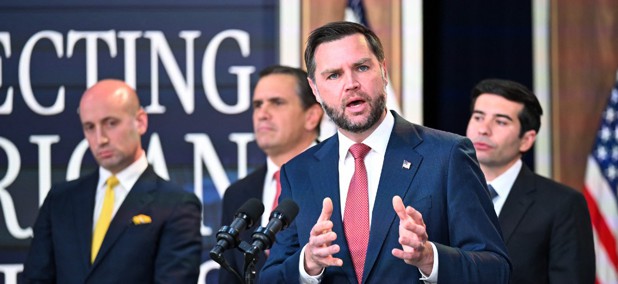
Vice President J.D. Vance calls Microsoft the "biggest abuser" as the administration freezes new and pending H-1B and PERM applications for eight companies.
Industry will have an undetermined amount of extra time to gear up for this contract to centralize IT operations across the entire Homeland Security Department.
Also included in this listing: the Navy's Task Force 59 founder starts a new role and AT&T's chief operating officer takes up a board seat at a major federal IT provider.
The tuck-in acquisition adds public key infrastructure and credential management tools already embedded across the intelligence community and Defense Department.
A joint venture of Amentum and Science Applications International Corp. has two decades of incumbency, but a challenger is questioning the fairness of the Justice Department's evaluation of recompete bids.