
HTL moves ahead on next-generation radio efforts
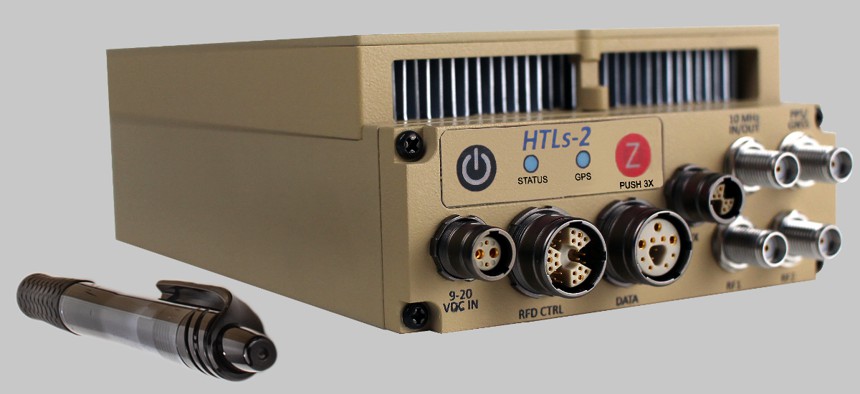
The new HTLs-2 radio built by Herrick Technology Laboratories. HTL photo.

 By
Ross Wilkers
By
Ross Wilkers
Executives at the software-defined radio maker outline its approach to tech development and highlight one example of blending in commercial creations.
For Herrick Technology Laboratories, every aspect of its strategy and vision is connected in some way to product development efforts and especially its line of software-defined radios for defense operators.
HTL entered this current phase of its strategy in 2024, when the investment firm Blue Delta Capital Partners acquired a non-controlling stake in the company. Two years later, Chad Kettering moved up to chief executive as then-CEO Acie Vickers moved over to chairman of the board of directors.
In a conversation with WT, Kettering said one of the company’s nearer-term priorities involves its new HTLs-2 radio that is now in full-rate production. HTLs-2 and other radios made by the company are designed with an approach commonly called low-SWaP – size, weight and power.
“We’re investing our (independent research-and-development) funds in developing these, so we’re not waiting for customer demand,” Kettering said. “This is the first of our next generation of software-defined radios, and we’re focusing our energy on enabling a broader range of mission sets and capabilities.”
HTL first started out in 2000 as a research-and-development laboratory and has since evolved into a designer and maker of products for use in signals intelligence and electronic warfare.
Prototyping remains a key part of the equation for HTL amid the Defense Department’s overall agenda for fielding technologies on a more rapid turn, including more reliance on commercially-developed products.
HTL’s newest product could serve as an example of how the defense tech industry can blend commercial creations into solutions for its customers.
Shane Sims, chief growth officer, said HTL integrates the “same Qualcomm chips that are inside” cell phones into the radios.
“You’re literally seeing Moore’s Law and the ability to leverage commercial technology at play,” Sims said. “That’s how we’re able to miniaturize a military-grade capability.”
Another key step for HTL to mature itself as an organization centers on its board of directors, which Kettering said was formerly comprised of internal founding members for the most part.
Vickers and Blue Delta co-founder Mark Frantz are continuing on the board, which has added these additional members:
- Joe Dyer -- former commander of Naval Air Systems Command and former iRobot chief operating officer.
- Eddie Bair -- former Army program executive officer for intelligence, electronic warfare and sensing
- Ed Miller -- former Special Operations Command PEO for intelligence and information systems
- John Slaughter -- co-founder of Digital Receiver Technology
- Phil Carrai -- president of Kratos Defense & Security Solutions’ space, training and cyber division
“We’re able to now capitalize on their experiences and guidance in navigating the current customer scene, as well as leverage the folks that they have relationships with industry and the Department of (Defense),” Kettering said. “It’s certainly provided us many opportunities to ensure that we’re aligning in the current direction.”