
Jim Flyzik helped transform government IT from back-office function to mission enabler
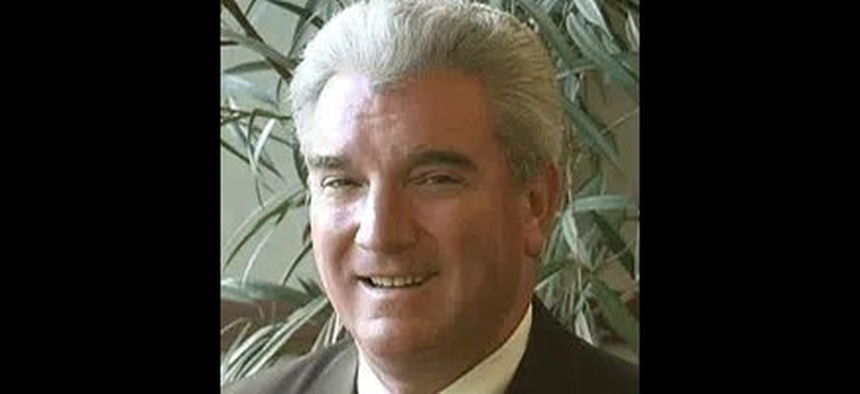
Jim Flyzik, former Treasury CIO and an early leader of federal IT, has died at age 72.

 By
Nick Wakeman
By
Nick Wakeman
The former Treasury chief information officer and early federal IT leader died June 4 at age 72.
The federal government went through tremendous changes in the late 1990s and early 2000s.
The Clinton Administration’s National Partnership for Reinventing Government to streamline processes and cut bureaucracy was one of them. Then there was the Y2K threat and the terrorist attacks of Sept. 11, 2001.
These were large momentous events that became watershed moments and elevated the role of information technology from a back-office function to a mission-enabler.
Jim Flyzik, who died on June 4 at age 72, played a critical role in this transformation as a long-time IT executive at the Treasury Department and one of the government's first chief information officers. He helped stand up the infrastructure for the launch of Homeland Security Department.
Flyzik is being remembered by colleagues and friends for his many accolades and accomplishments and for his character and integrity.
“Jim Flyzik was the rare kind of colleague who quietly made everyone around him better,” said Ira Hobbs, a long-time government executive and former Treasury CIO. “He possessed a beautiful combination of selflessness and dedication.”
Charles Armstrong, another former government CIO, described how Flyzik built his career around hard work, determination, and relationship building.
“During the 1990s, Jim pushed for adoption of the internet in government. He helped leaders from the vice president to the rank-and-file program leader under the value of new technology in terms they could understand,” Armstrong said.
Flyzik’s career also intersected with the passage of the 1996 Clinger-Cohen Act, which created the CIO position across the agencies. That law also led to the formation of the Federal CIO Council and more governmentwide cooperation.
Flyzik was one of the early leaders of the council and was recognized as a proponent of finding common solutions across agencies.
His accolades included being selected for the Federal 100 and Eagle awards given by FCW, now part of NextGov and GovExec.
It is hard to imagine how disconnected government IT was then, but Flyzik was a driving force at the CIO Council that he served as vice chair for.
Flyzik came into his own with the passage of the Clinger-Cohen Act, former Veterans Affairs Department Ed Meagher said.
“Many of us post Clinger Cohen CIOs were zealots who wanted to storm the bastions of entrenched resistance to change,” Meagher said. “But Jim was the ultimate pragmatic tactician. He knew how to calm us down and work methodically to get every CIO reporting directly to the secretary of their department.”
Flyzik's ability to speak in a non-threatening way to those entrenched bureaucrats was a key to his success, Meagher said.
“One could count on the monthly council meetings having a packed agenda, be high energy and sprinkled with zingers and humor. And then Jim summing up, "Okay, so this is how things will go down,” said Alan Balutis, a long-time government official and a former senior director and distinguished fellow at Cisco Systems.
“He was a leader in getting the CIO Council up and running, especially making the link between the newly created agency CIOs and the Office of Management and Budget,” said Mark Forman, a former federal CIO. “He was always positive, a person with humor and class.”
Meagher said that it was Flyzik who lured him back into government service to take VA CIO post.
“He was the master of the soft sell,” Meagher said.
While Flyzik was a leader who saw the value of IT and how it can contribute to the mission of government, many of his former colleagues talked about what he meant to them as a person.
“He cared about people both personally and professionally. He taught many of us to think beyond the boundaries that we set for ourselves,” Armstrong said.
Rob Guerra, another former government executive, shared how Flyzik liked to mentor young people. After Flyzik retired from government, he joined a consulting firm that Guerra formed with Phil Kiviat.
“Jim was a very talented and impactful guy,” Guerra said.
“One of our brightest stars went out,” said Bob Woods, a former General Services Administration official. “He was open-minded and a collaborative kind of guy. He knew that you got a better product when you had more people involved.”
After his retirement, Flyzik also joined Tom Trezza as part of the Federal Executive Forum radio program to showcase government leaders who make an impact. Flyzik became the host and moderator.
“I can’t remember a single person who would ever refuse him because of his reputation and the respect for what he accomplished while in government,” Trezza said.
Flyzik’s obituary speaks about his love for his family. His wife Candace and a daughter were by his side when he died June 4 in Myrtle Beach, South Carolina, his wife.
A celebration of Flyzik’s life will take place Friday, June 19 at the Tower Club in Vienna, Virginia from 3-6 p.m. Remarks will start at 4:30 pm.
A second celebration of life is set for July 25 in Flyzik’s hometown of Lansdale, Pennsylvania at the Cannoneers Sports Club. That event will run from 3-6 p.m.
In lieu of flowers, the family asks that donations be made in his name to the Pulmonary Fibrosis Foundation at pulmonaryfibrosis.org or March of Dimes at marchofdimes.org/dmv.