
The edge is where military AI meets reality
Gettyimages.com/onurdongel

Deploying AI at the tactical edge isn't a software problem. It's a full-stack engineering challenge that commercial architectures weren't built to solve, writes Cale Stephens, vice president at Crystal Group.
Artificial intelligence is rapidly transforming military operations and the conversation is shifting.
The defense community is no longer asking whether AI can deliver operational value. The focus now is how to deploy AI reliably in the environments where missions occur: at the tactical edge.
That shift changes everything.
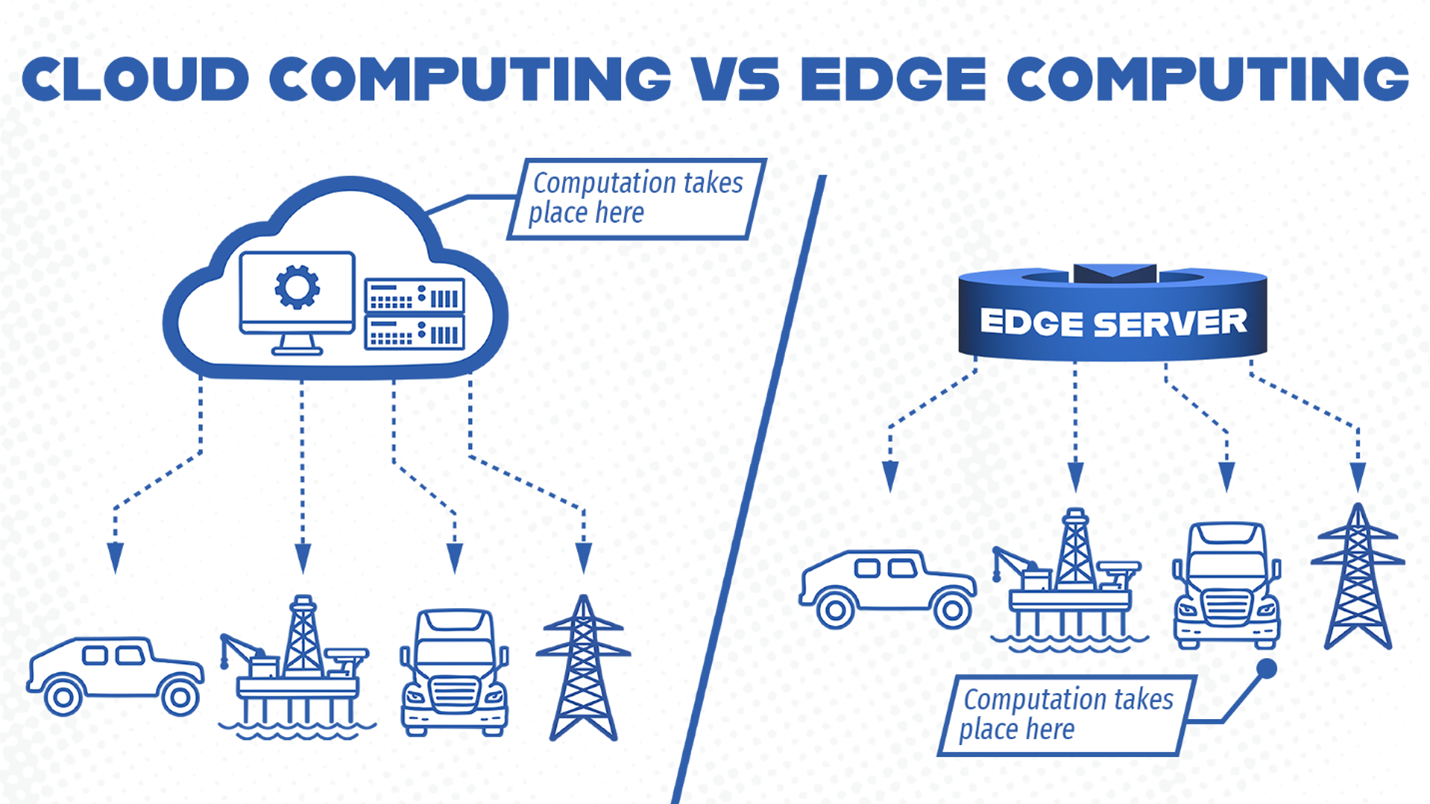
Most commercial AI architectures were designed around centralized cloud infrastructure, abundant power, stable connectivity, and controlled operating conditions. Tactical environments offer none of those conveniences. Forward-deployed systems must operate in extreme temperatures, high-vibration platforms, contested electromagnetic environments, and disconnected or degraded networks, all while delivering real-time decision support to operators who cannot tolerate latency or system failure.
As AI adoption accelerates across intelligence, surveillance and reconnaissance (ISR), autonomy, sensor fusion, electronic warfare, and predictive maintenance applications, engineering teams are confronting a difficult reality: advanced AI models are only as effective as the infrastructure supporting them.
Compute performance alone is no longer enough.
Running AI workloads at the edge requires a fundamentally different approach to system design. High-density GPUs and accelerators generate significant thermal loads, demand reliable high output power, and often exceed the size, weight, and power constraints of tactical platforms. Systems originally engineered for commercial data centers frequently struggle when exposed to shock, airborne vibration, dust intrusion, or intermittent connectivity.
The challenge is not simply ruggedizing hardware after the fact. It is designing infrastructure from the outset to sustain AI operations in austere environments.
That distinction matters because the tactical edge introduces operational requirements that cloud-native architectures were never intended to solve. Data must often be processed locally due to bandwidth or operational limitations, or even communications denial. AI inferencing must continue even when disconnected from centralized networks. Systems must integrate with legacy platforms while maintaining cybersecurity, performance, and long lifecycle supportability.
Equally important is the growing emphasis on trust and operational reliability.
Operators need AI-enabled systems that provide actionable outputs under pressure, not black-box recommendations that cannot be validated in time-sensitive scenarios. Transparency, predictable system behavior, and infrastructure resilience are becoming increasingly important as AI transitions from experimental capability to mission-critical functionality.
Programs such as Project Maven demonstrated the operational value of AI-assisted analysis, but they also reinforced the importance of deploying AI within reliable, field-ready compute environments.
This is creating a broader industry realization: operational AI is now a full-stack engineering challenge. Success depends on more than algorithms or model accuracy alone. It requires tightly integrated compute, networking, thermal management, cybersecurity, and ruggedization strategies engineered specifically for contested environments.
The organizations that lead the next phase of AI deployment will be those that understand the realities of operating at the edge, where connectivity is uncertain, environmental stress is constant, and mission continuity is non-negotiable.
The future of military AI will not be defined solely by model sophistication. It will be defined by whether those systems can perform reliably where the mission demands them most.